A proposed visual identity and experience of Nuit Blanche, Toronto’s annual night-time arts event.
UX/UI designer, UX researcher, visual designer
12 weeks
Over a million visitors attend Nuit Blanche annually.
Nuit Blanche is a free night-time arts event with multimedia art installations, performances, and other activities. Taking place annually across Toronto, the familiar city is transformed from 7PM to 7AM.

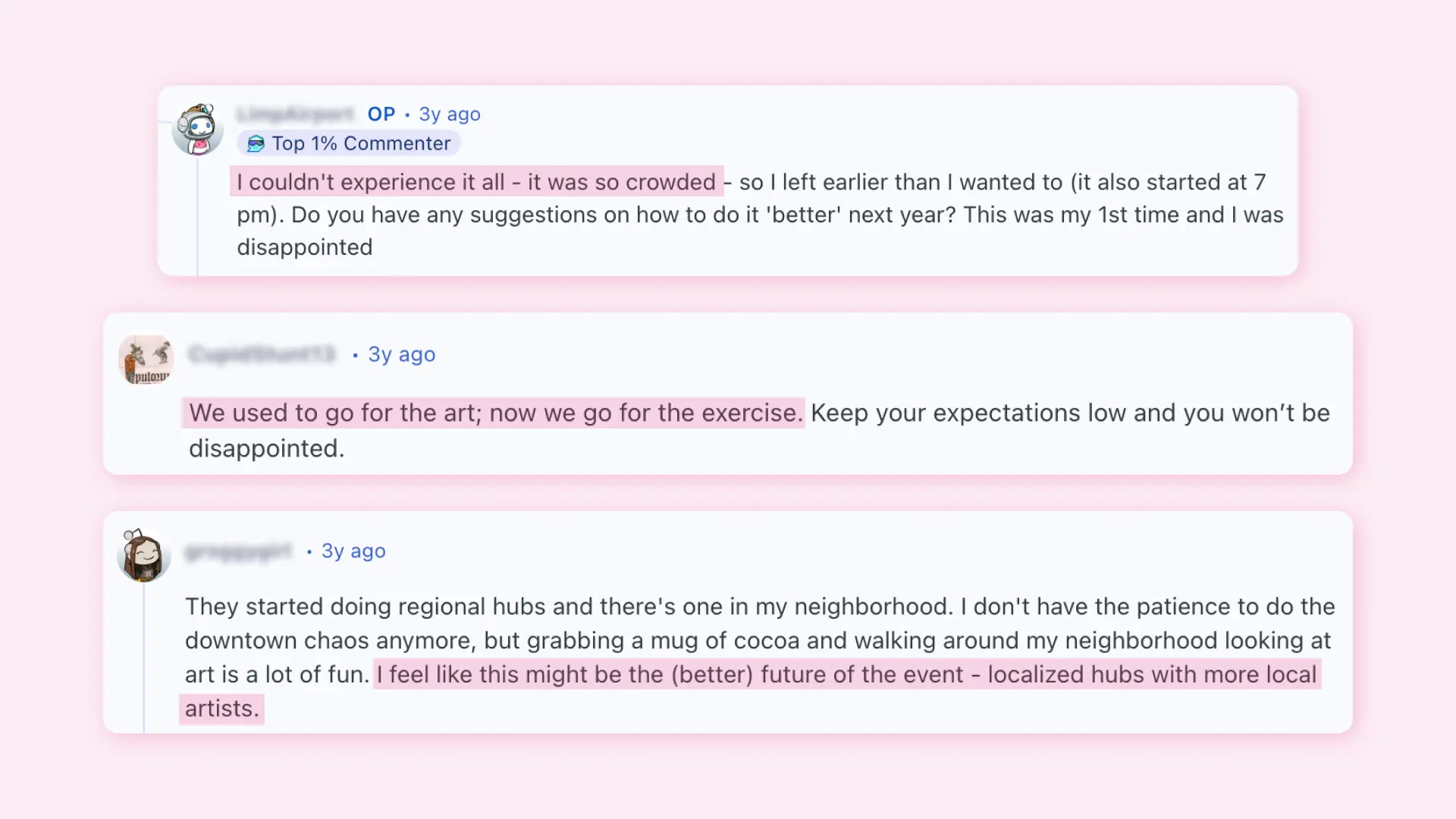
Despite its popularity, the event gets poor reviews each year.
Over the years, some comments stand out as long lasting issues that seem to go unresolved. Digging deeper into the root of these issues, they reveal a problem with Nuit Blanche's navigation tools.


Key insights from online comments and the in-person experience.
I identified the main factors contributing to visitors' negative experiences through observational research at the event and desk research.

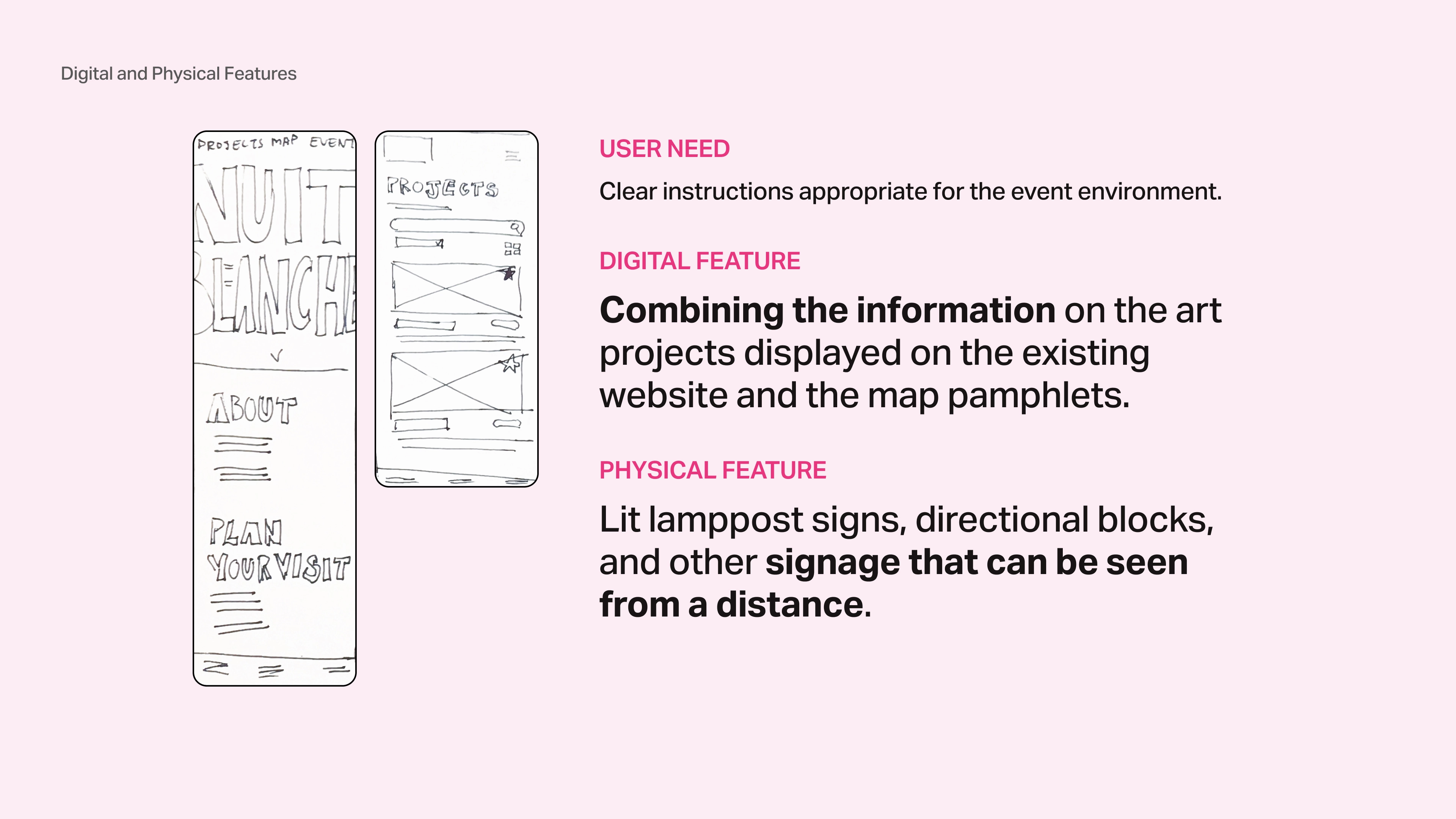
Users need clear instructions appropriate for the event environment
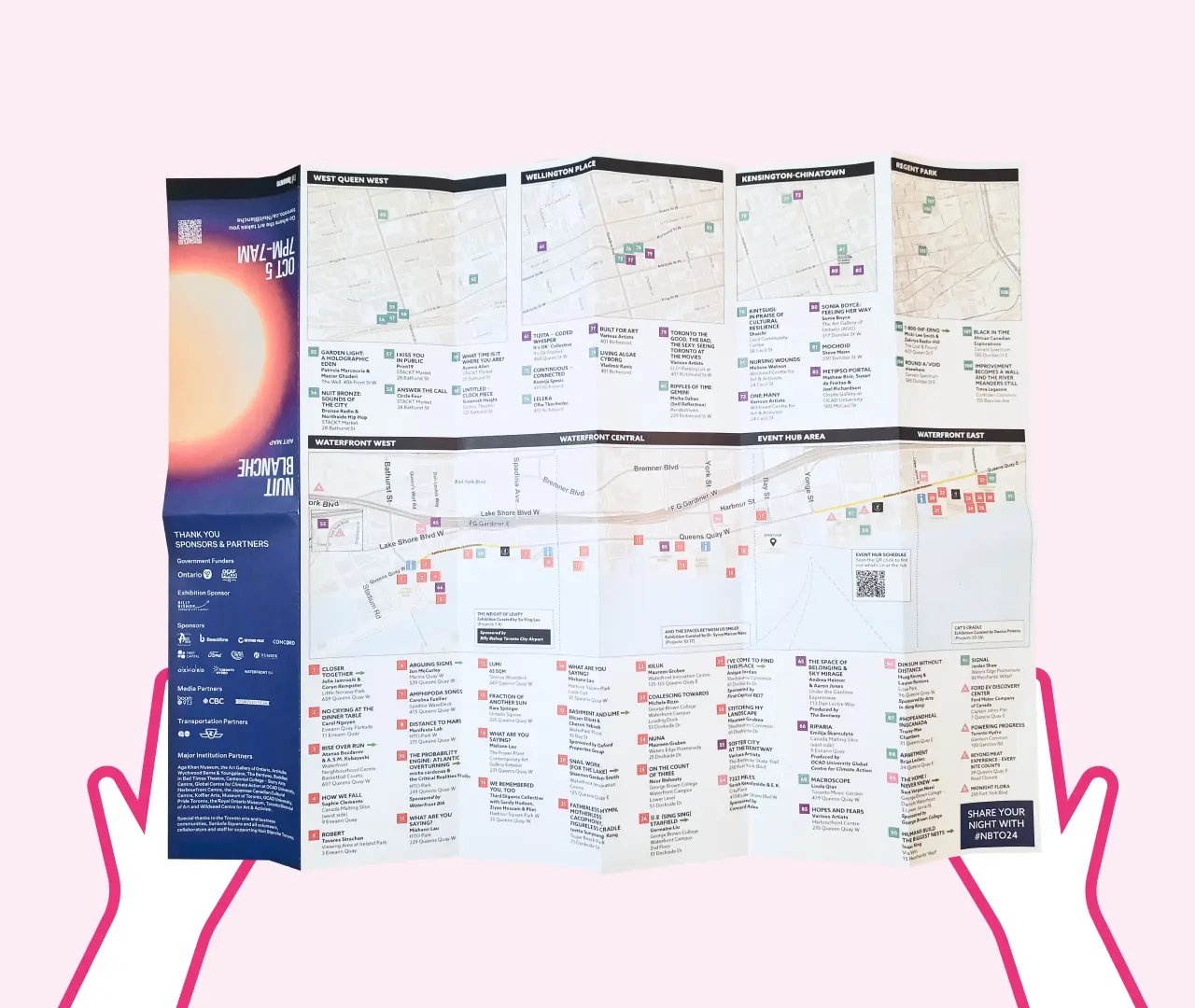
Provided navigation tools currently don’t account for the lack of lighting and crowds. This makes it difficult for visitors to effectively use the large printed maps and unlit signage.

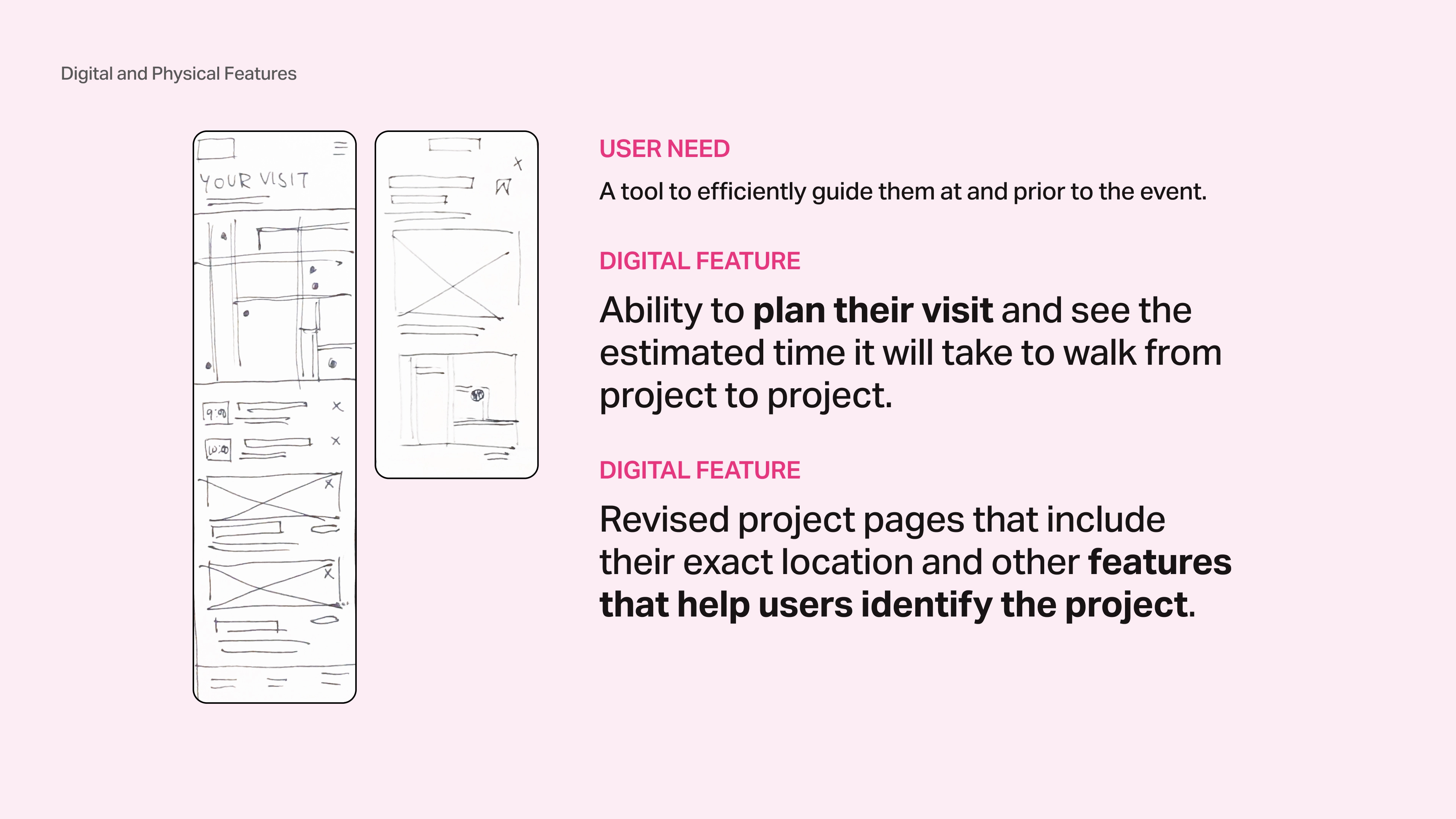
Users need a tool to efficiently guide them at and prior to the event
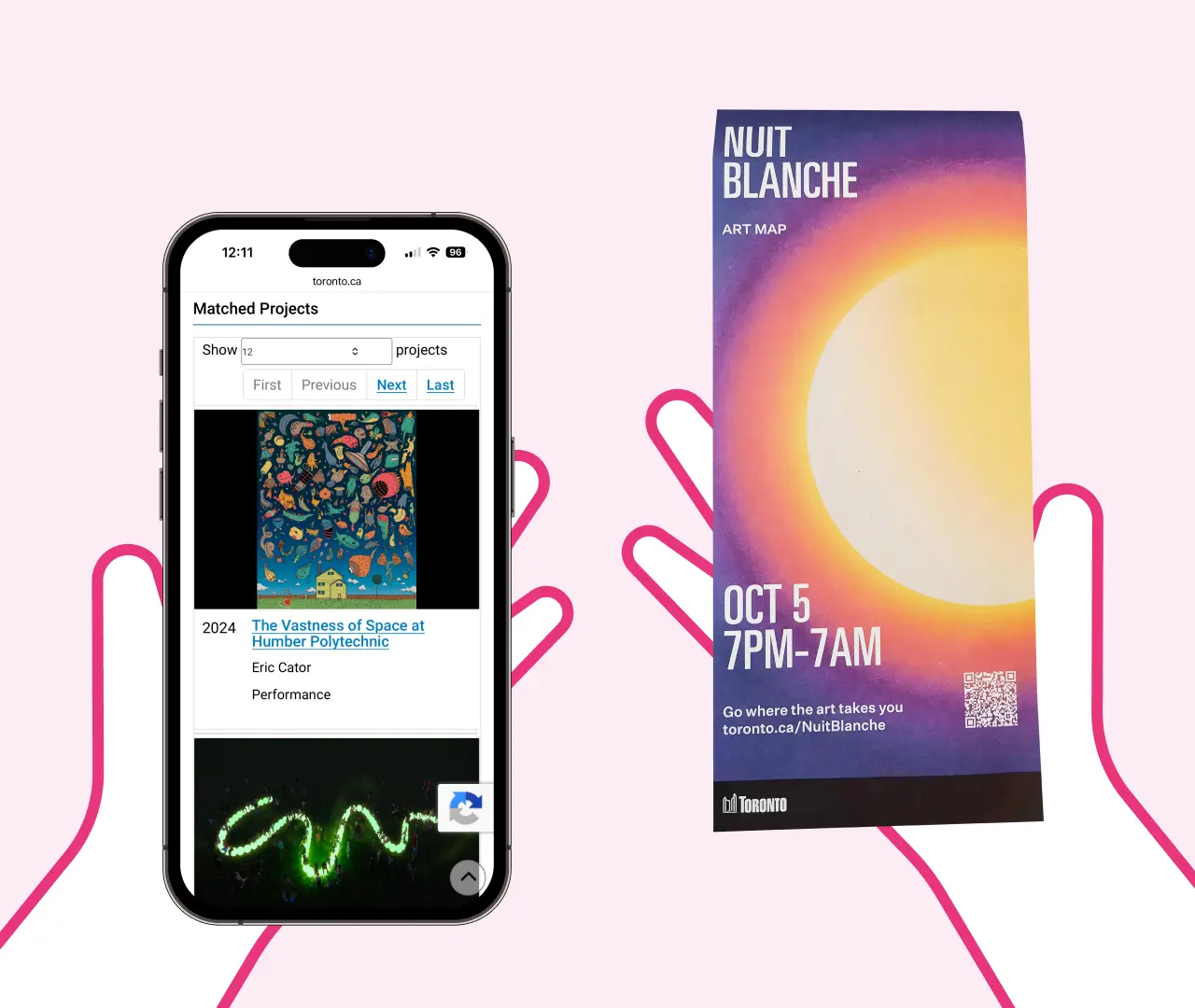
Inconsistent details between the existing website, maps, and other signage results in frustrating attempts to locate projects.

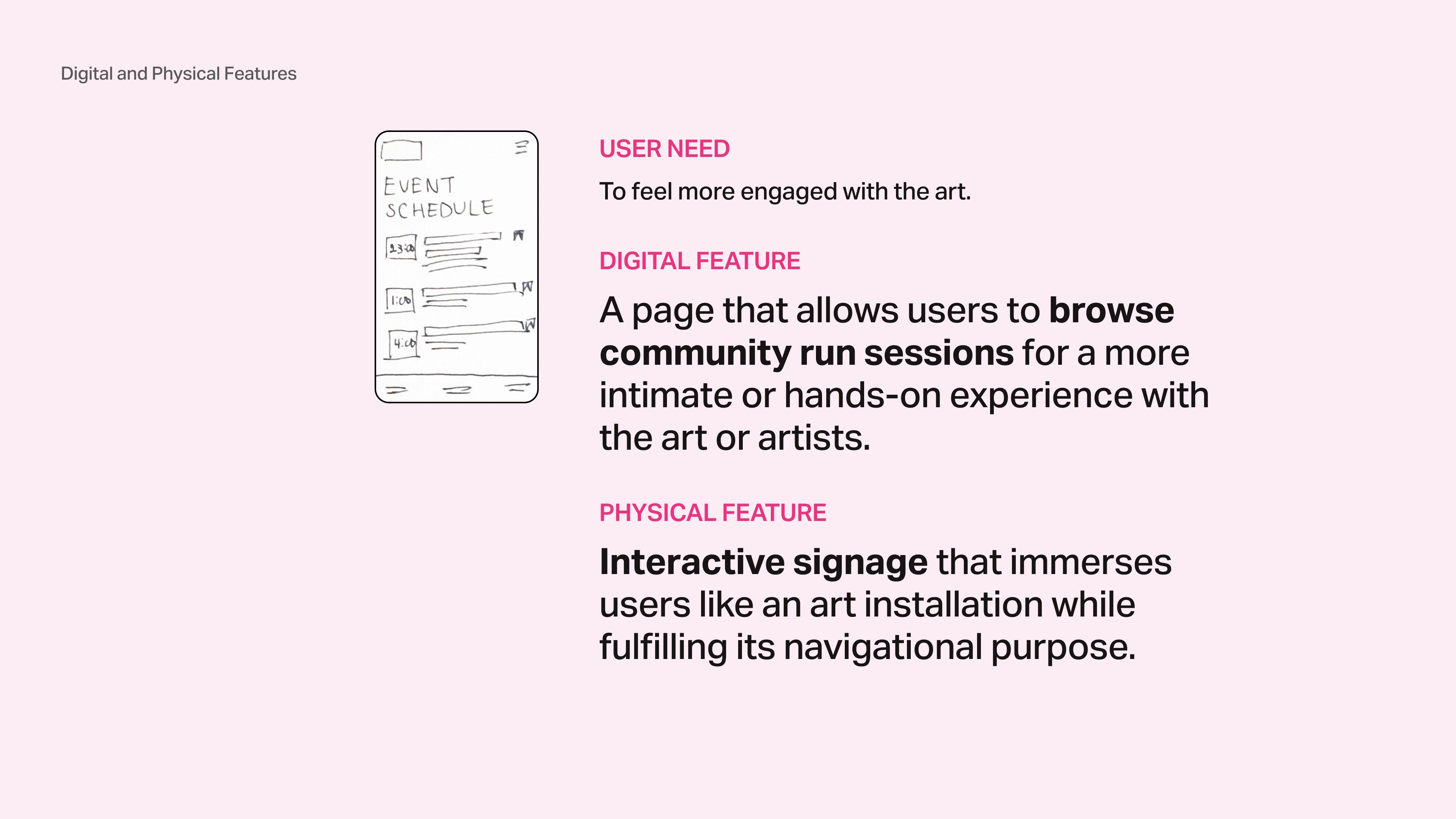
Users need to feel more engaged with the art
Visitors feel disappointed with the lack of engagement with the art and art community due to overcrowding.
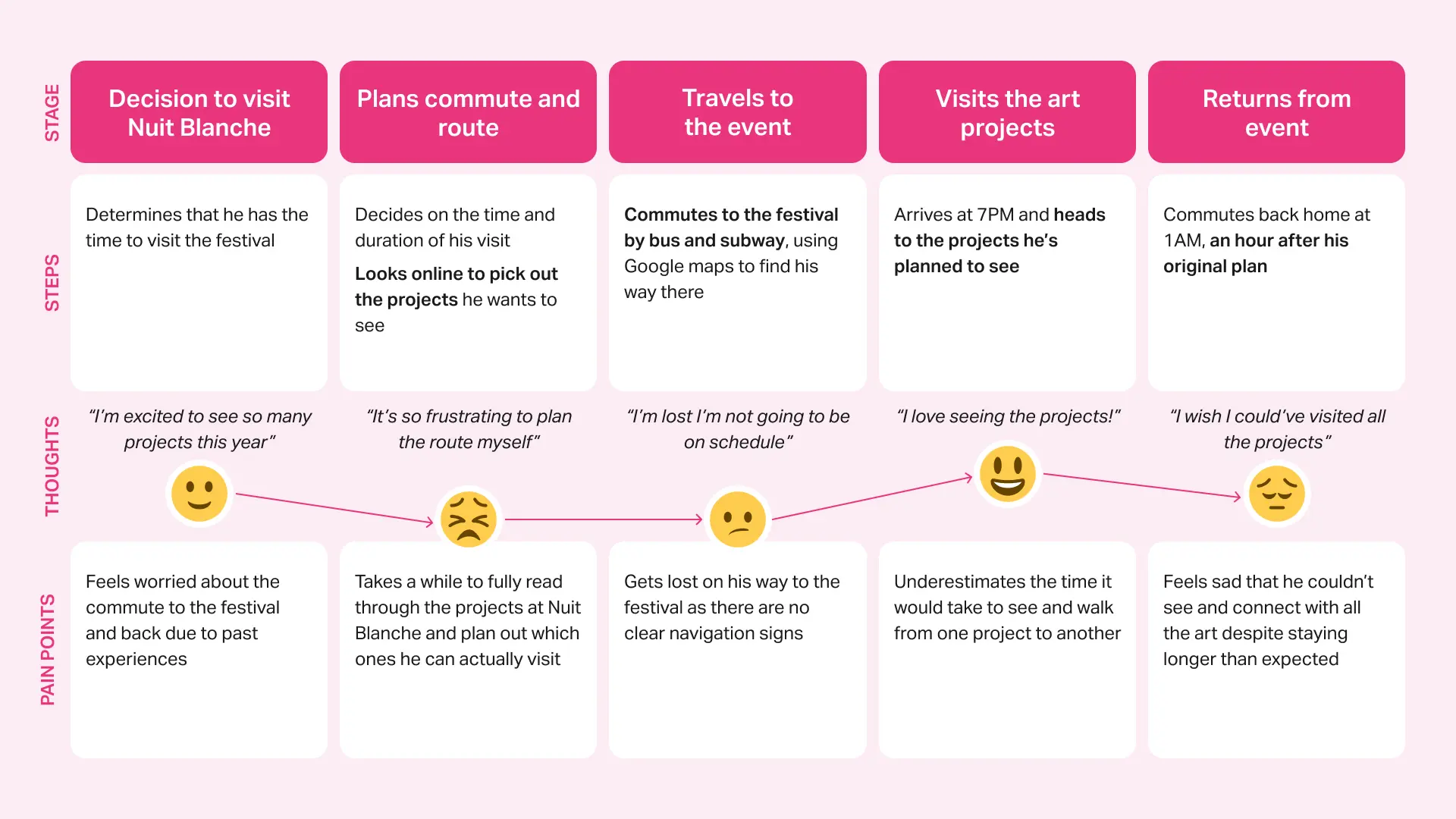
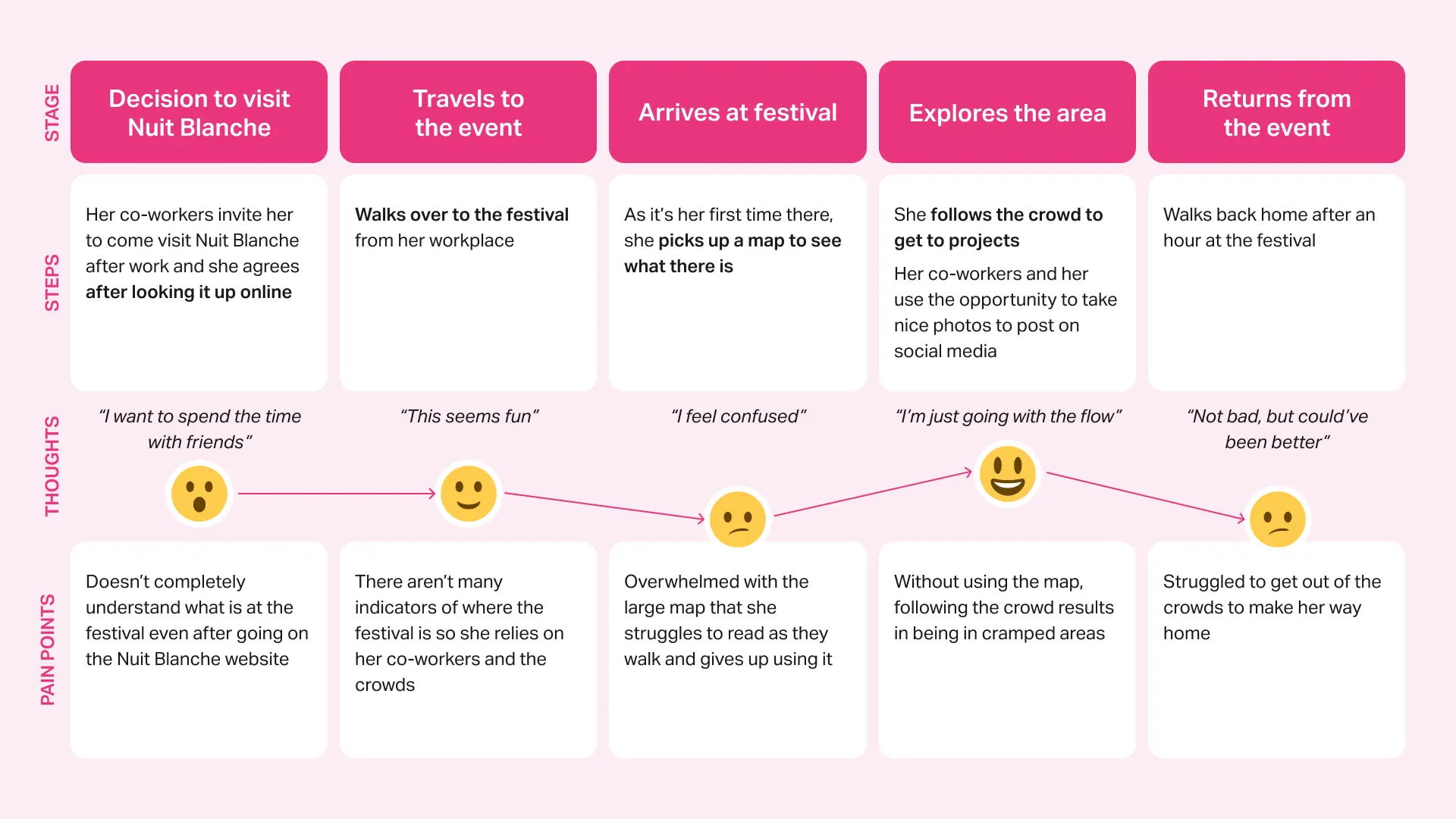
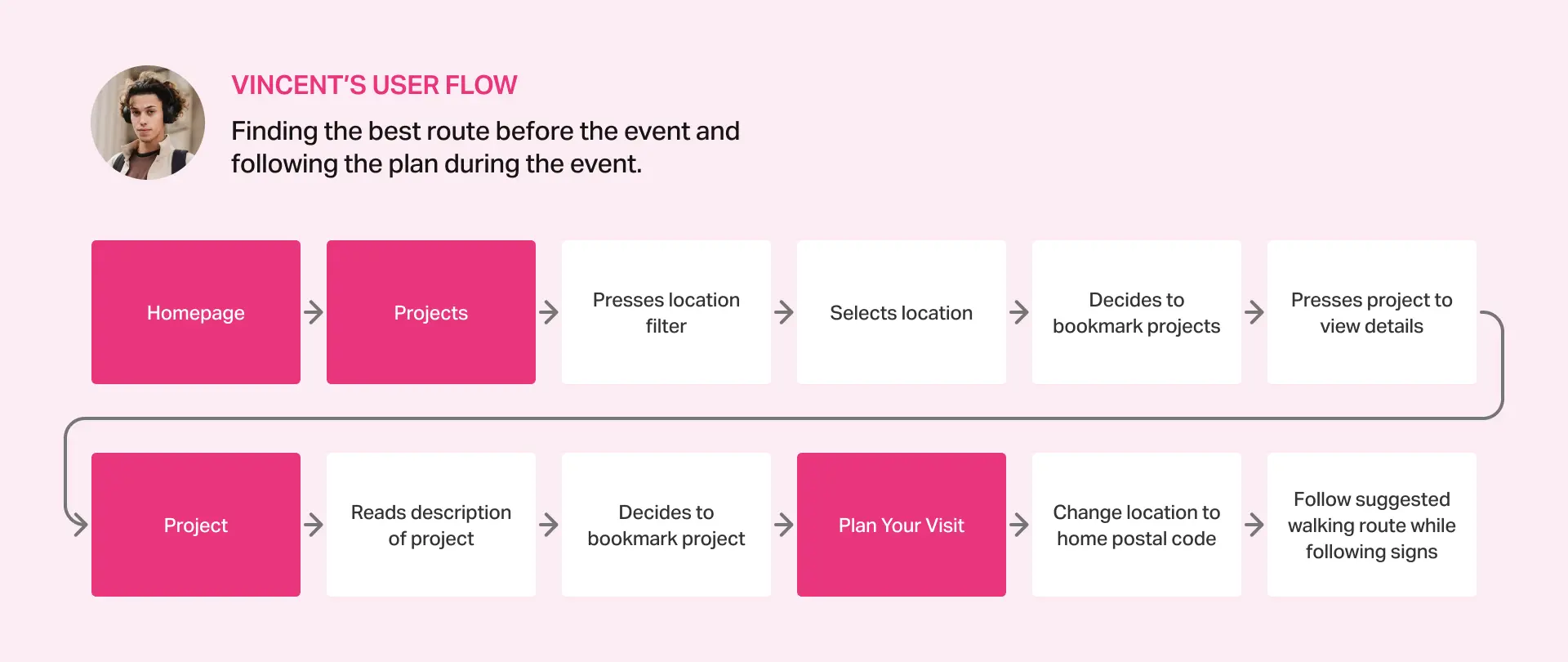
Visualizing the user journey to identify opportunities for improvement.
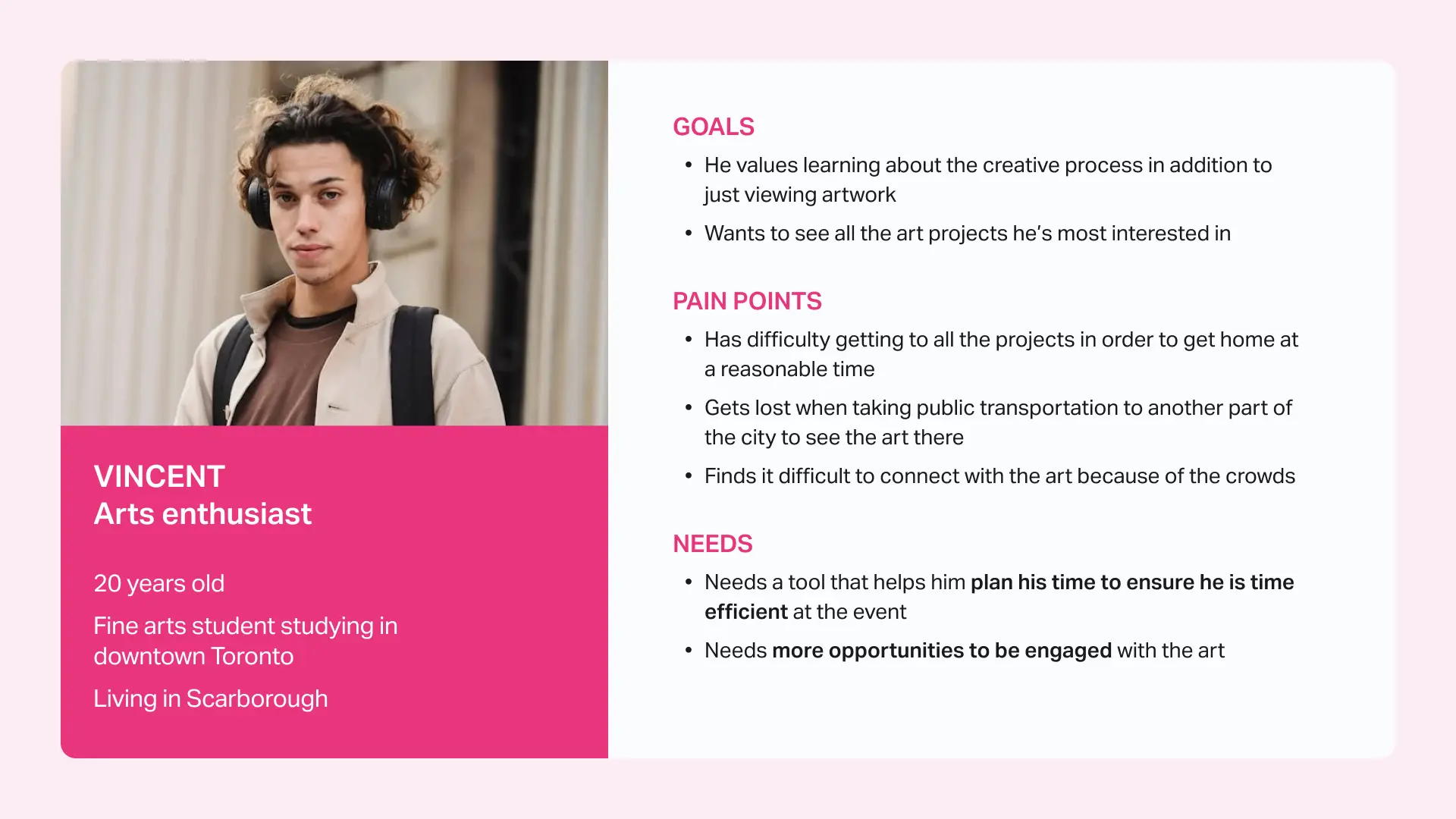
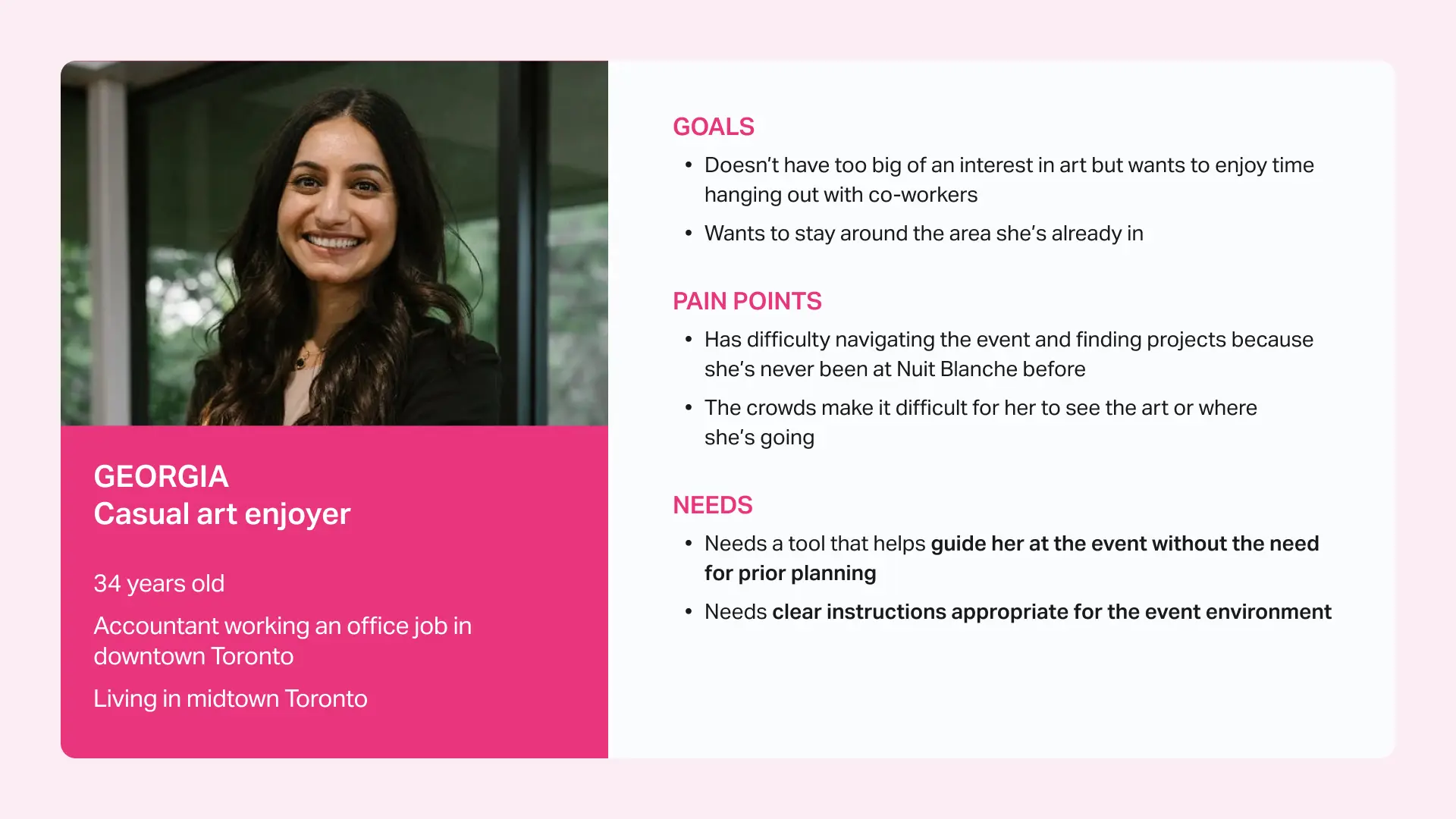
My research revealed two types of people that tend to visit the event. As they have different experiences, I created two personas to account for their respective needs and pain points.
Repairing Nuit Blanche's reputation.
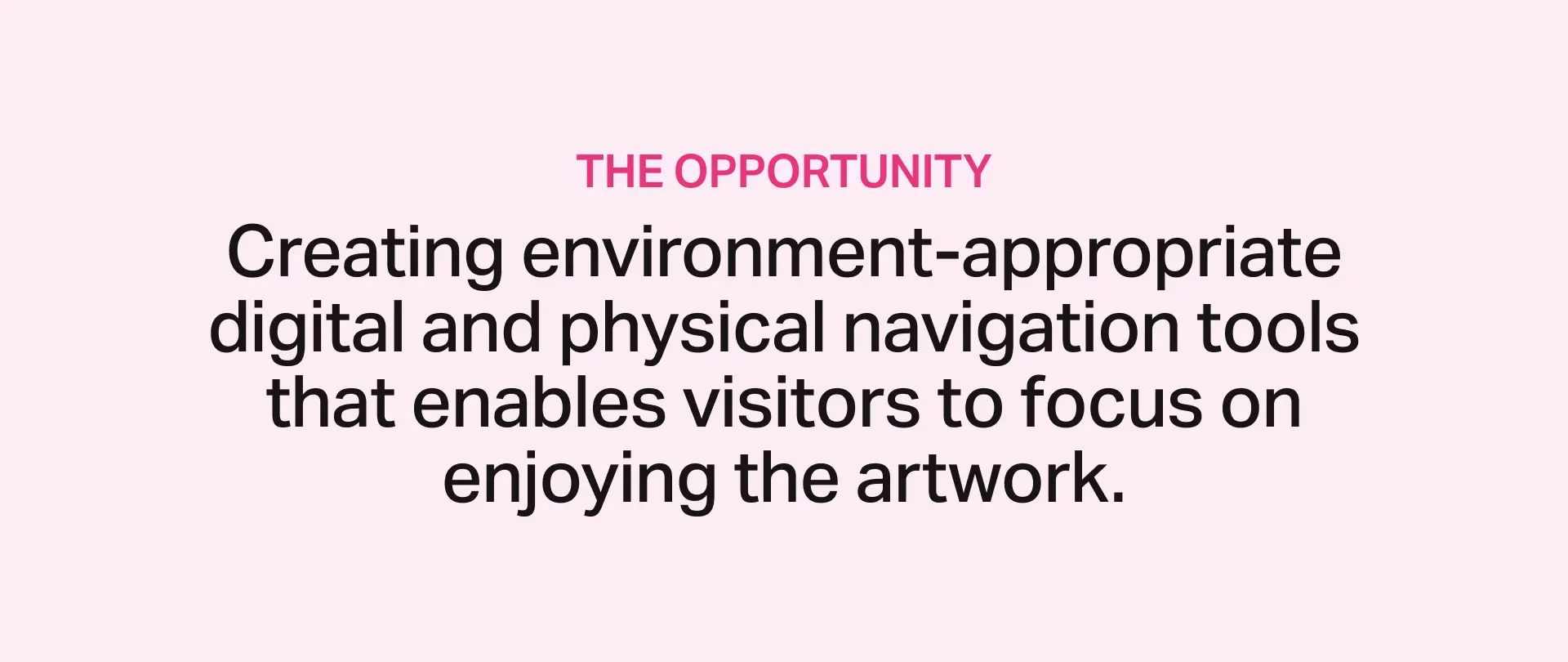
Knowing the key problem and the need for better navigation and art engagement, there's an opportunity to improve the design of navigation tools.

Addressing user needs through digital and physical features.
Informed by the user needs, I ideated various digital and physical features and validated them with my initial user flows.


New insights from conducting usability and A/B testing.
I sat down with 3 participants to test the usability of the website, making improvements to visual accessibility and overall ease of navigation.

Insight 1
Exact locations of projects within buildings were unclear.
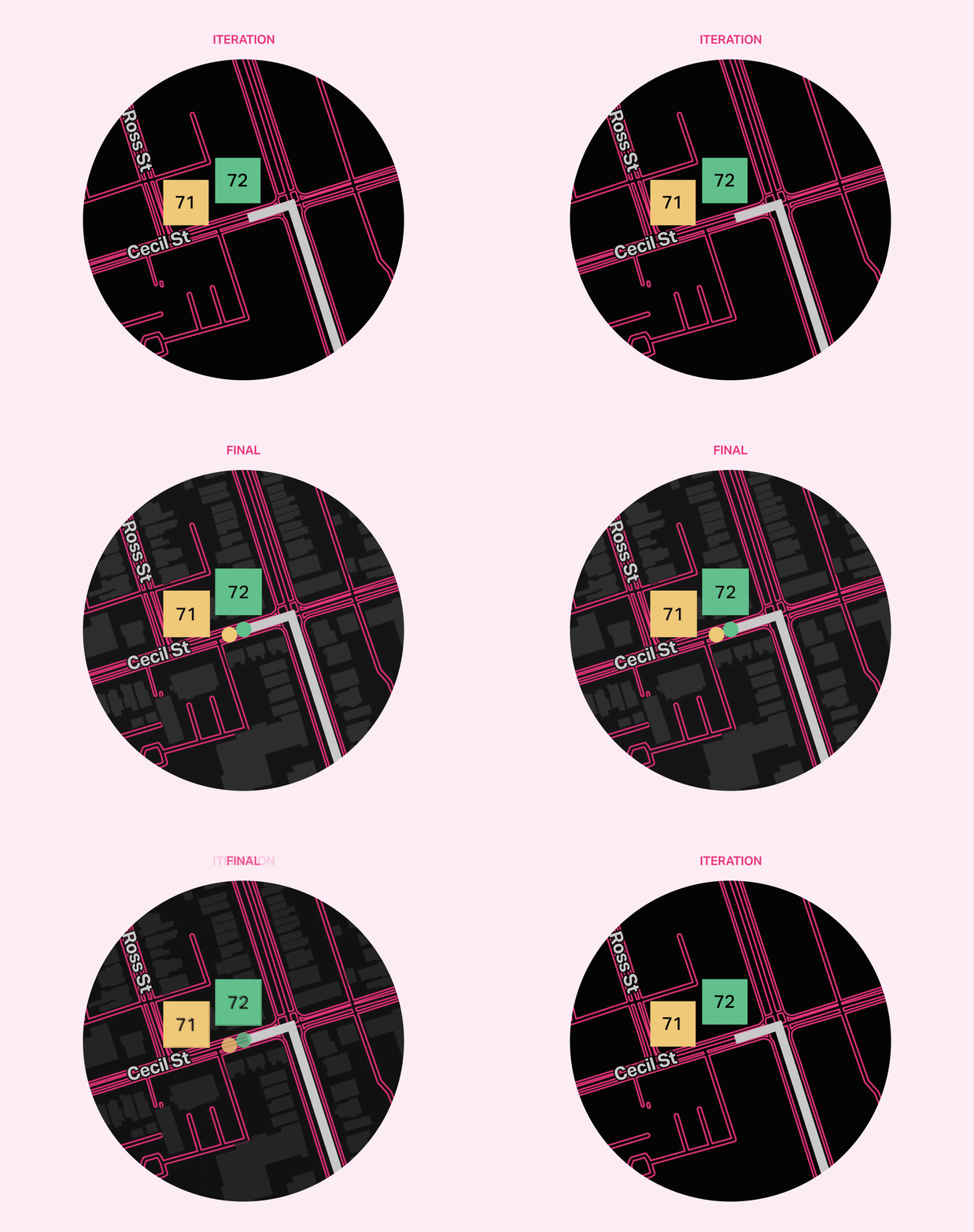
Added circular visual indicators the exact location or building entrance to improve clarity.

Insight 2
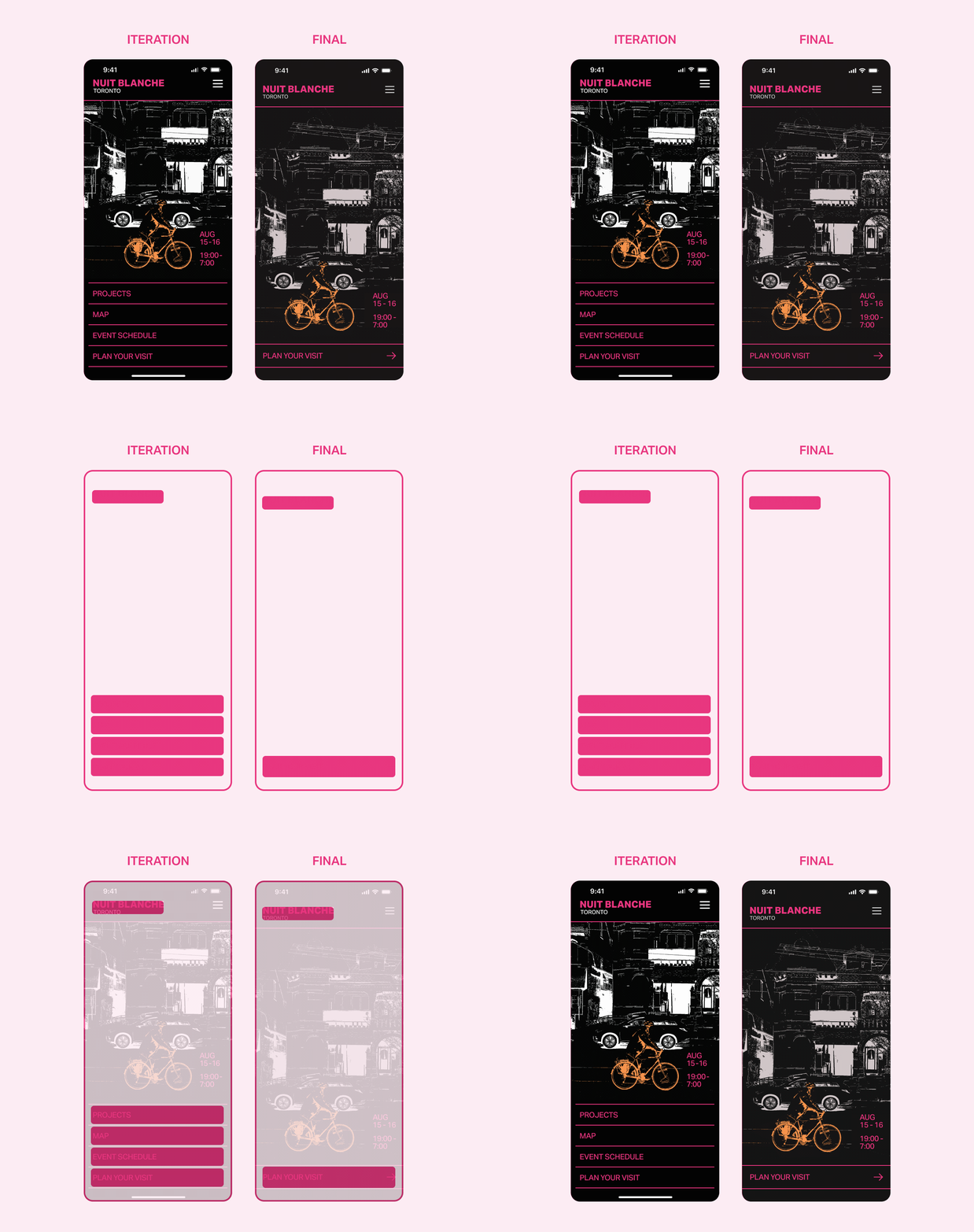
Lack of CTA on homepage made it difficult for users to decide what to start with.
Improved hierarchy of buttons through colour and location.

Insight 3
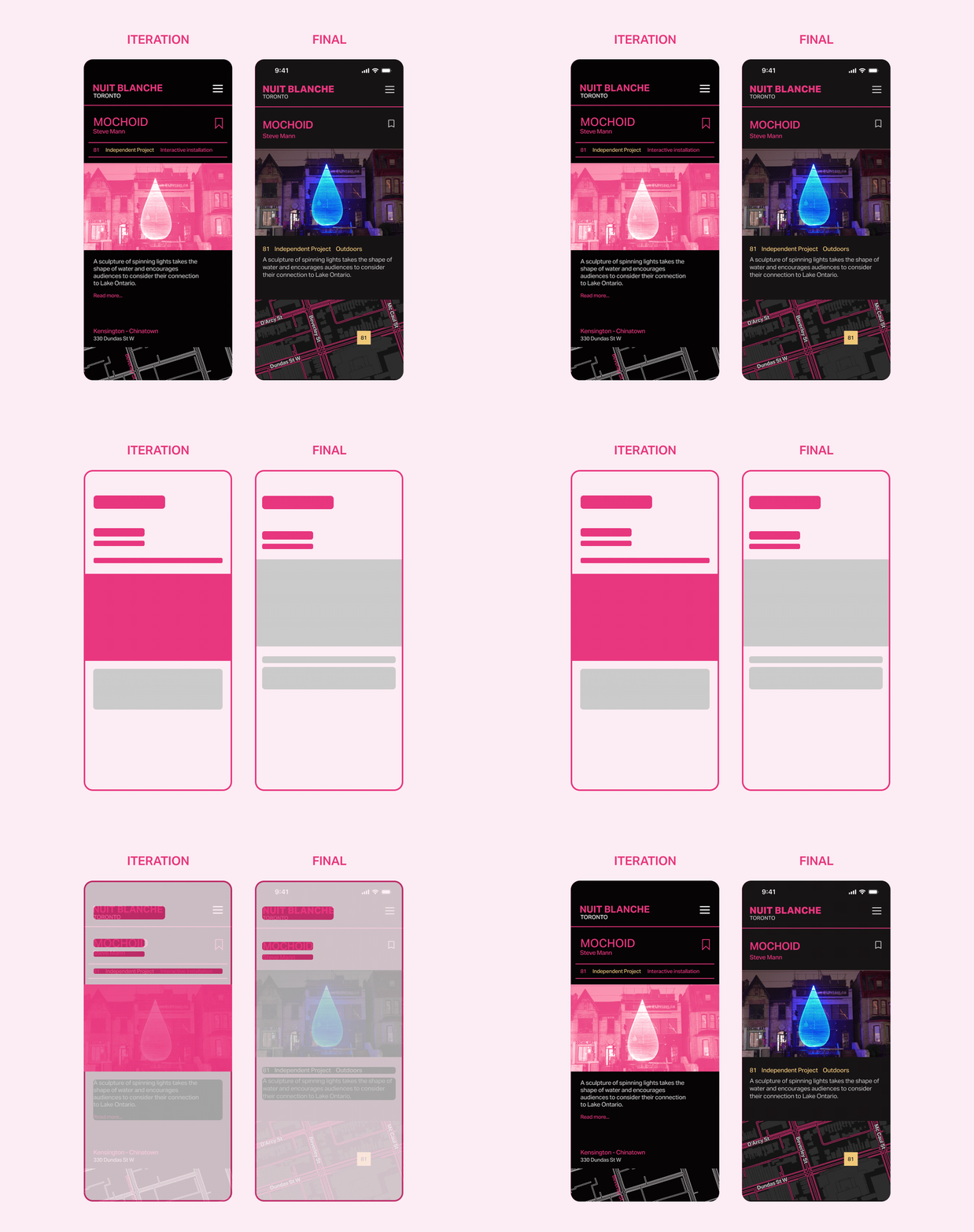
Greater preference towards seeing project images without colour stylization.
Included project images as the original on project pages, but kept stylized images during browse. Also decreased contrast between colours for improved visual accessibility.
Navigation tools designed for the Nuit Blanche environment that highlight the artwork instead of taking away from the experience.
Having both digital and physical navigation tools enables visitors to easily get to where they need to be in a dark and crowded environment.
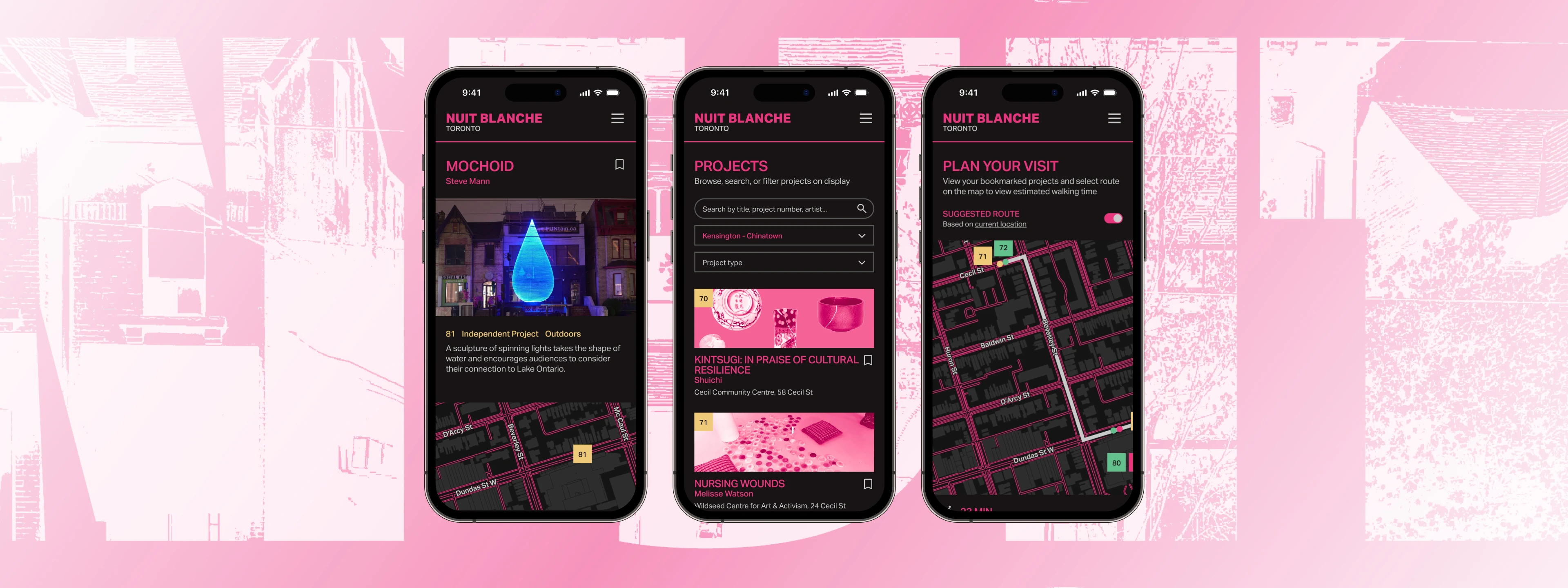
Browse through art projects and sessions to plan your visit.
Users can filter through art projects and sessions with relevant details to determine what they want to see. The website plots a suggested walking route with their bookmarked projects.

Engage with the community and art more closely through sessions.
The website leads users to community-run sessions like artist talks, workshops, and guided tours, directly connecting them to the art community.
.gif)
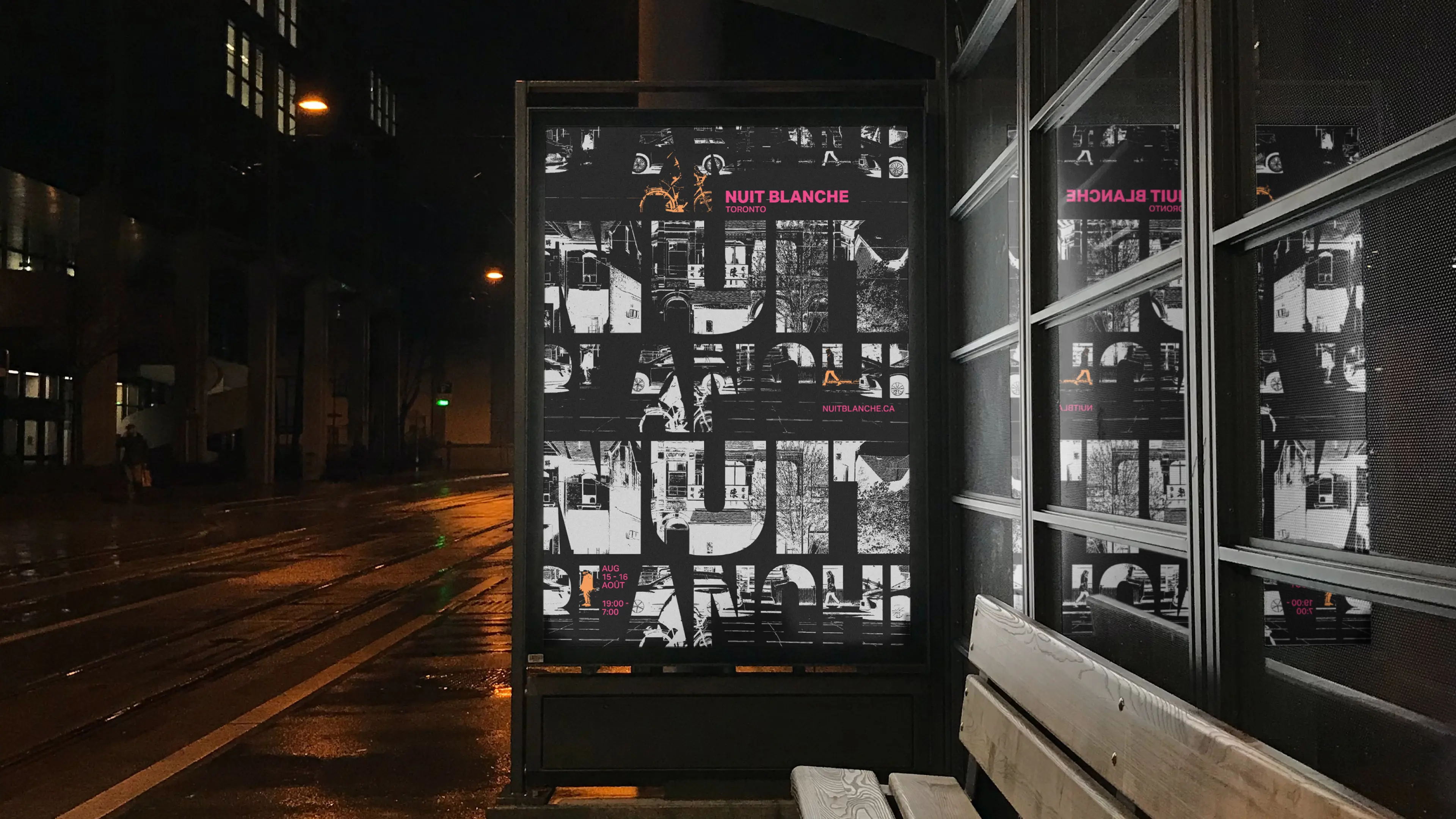
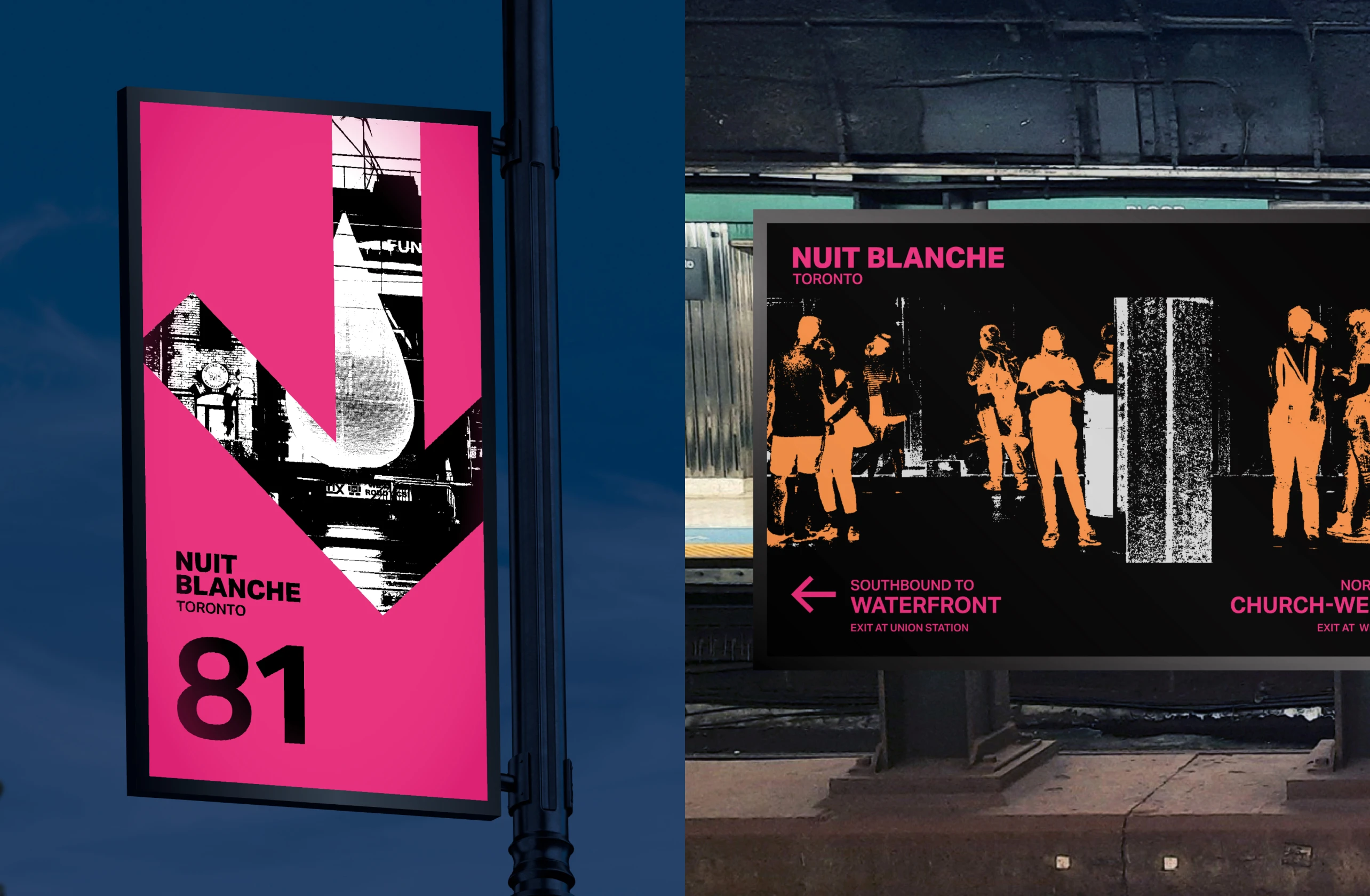
Navigate the event through visually exciting physical wayfinding signage.
Lamppost signs, navigation blocks, and interactive subway billboards guide visitors to the art projects across the city and set the tone.


I better understand the value of observational research.
My visit to Nuit Blanche to observe and experience the event helped me gain a better understanding of visitor needs. While interviews and surveys can provide helpful insights, observing users in real-life settings can reveal insights that users might not notice and mention themselves.